WHO WE ARE
HOW WE DO IT
3D Engagement Model
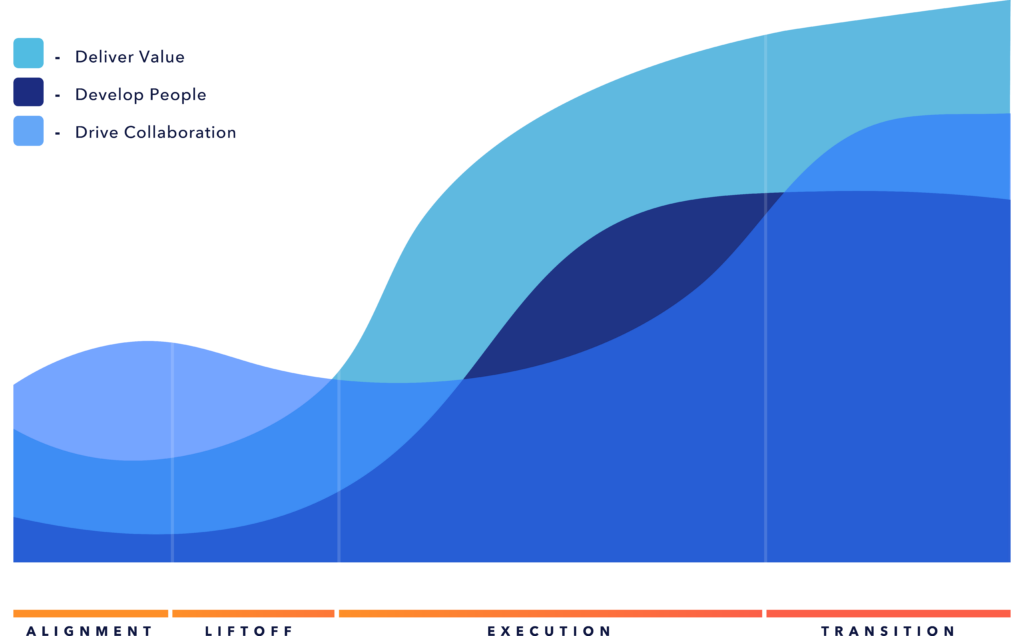
Elevating client experiences with Pariveda’s 3D Engagement Model

Go beyond traditional delivery with a multi-layered, phased approach that ensures measurable, sustainable value aligned with your goals—experience the difference.

INDUSTRIES
Building a more resilient utility future

Utilities are transforming to meet rising customer expectations, modernize aging infrastructure, and unlock greater value from their data. Organizations that invest in scalable data platforms and intelligent decision-making are better positioned to improve reliability, drive operational efficiency, and prepare for what’s next.


INSIGHTS
CAREERS

Choose a career that makes a difference

DOffering

Modernize the Systems Your Business Has Been Afraid to Touch

THE CHALLENGE

The Rules That Run Your Business Are Locked Inside Legacy Code

Mainframe, legacy COTS, and custom applications still run the work that matters most. Over the years they have collected the business
rules and operational knowledge your business depends on. Some of that knowledge lives in the code, often undocumented and tangled in
fragile dependencies and technical debt. The rest lives in the people who keep the business running, and fewer of them understand these
systems each year. Modernization estimates come back long and expensive, so the systems stay as they are, and maintaining them takes
up capacity that could go to better customer experiences and new business capabilities.

THE SOLUTION

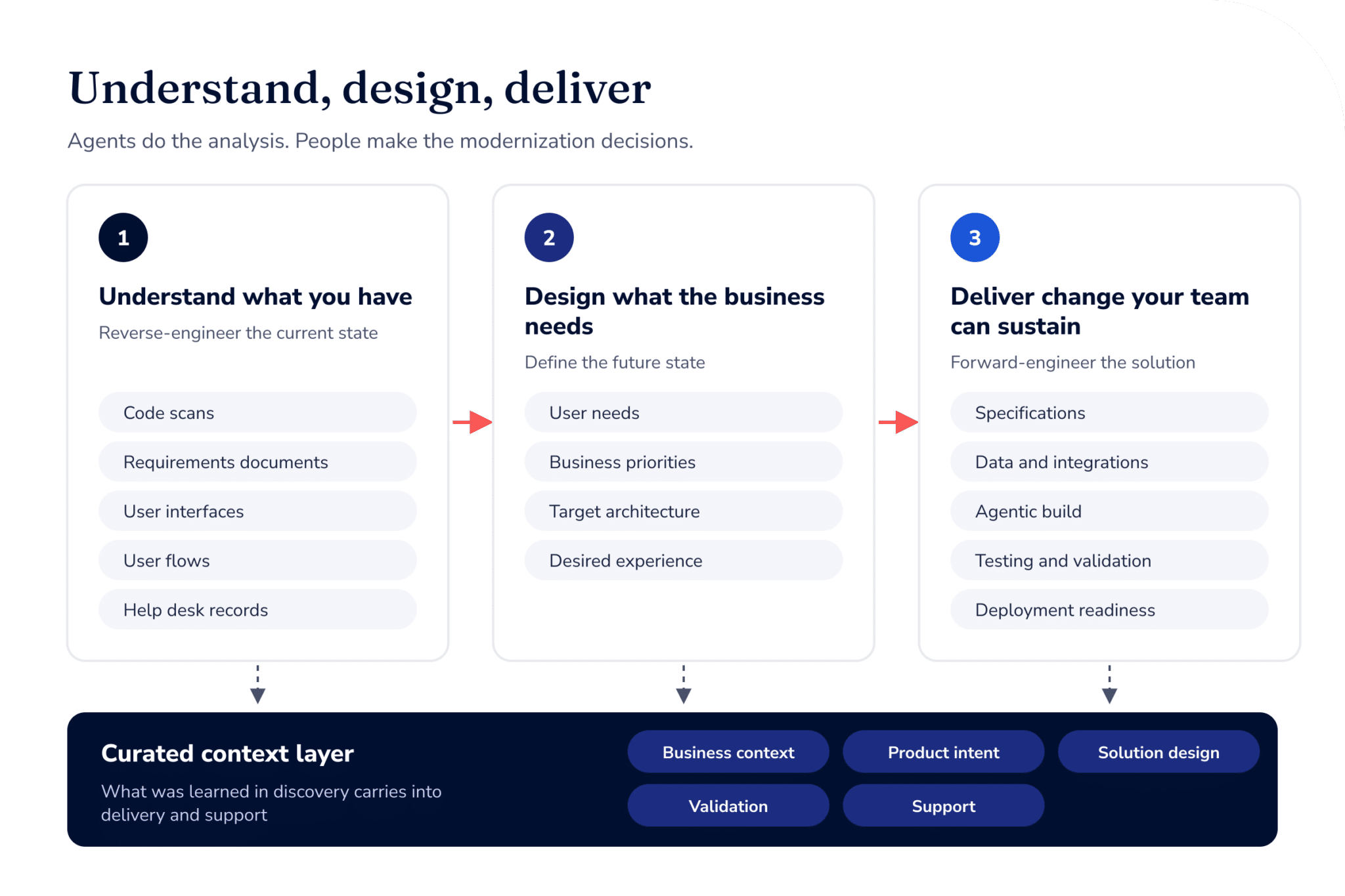
Agents Do the Analysis, and Your People Make the Modernization Decisions

Pariveda’s agentic modernization tooling analyzes code, documentation, data, and environments in days. We start with the decisions that matter: which capabilities to preserve, which workflows to improve, and where a different approach could create more value for the business. Because agents do the analysis, our consultants spend more of their time in the interviews and workshops where your business and technology leaders set priorities, validate what the agents found, and agree on organizational readiness and the target state. Every finding links back to the code or document it came from, and every requirement links to a finding, so the plan holds up when someone asks why.

Three Steps From the System You Have to the One Your Business Needs

Understand what you have

Agents reverse-engineer the current state from code, requirements documents, user interfaces, user flows, and help desk records, and map its business rules, architecture, integrations, technical debt, and operational risk. The people who use and support the application validate what the agents find.

Design what the business needs

Pariveda leads workshops that connect your target outcomes to user needs, workflows, architecture, and organizational readiness. Agents generate architecture options, and your leaders compare them against value, cost, disruption, and risk.

Deliver change your team can sustain

Delivery is spec-driven and agentic (agents build from specifications your team has approved). Each release is tested and validated before it ships, and quality checks, human review, and operational ownership stay connected from discovery through release.

A curated context layer records why the application exists, what outcomes it serves, how the new solution is designed, and how it will be supported. That record carries what was learned in discovery into delivery and into support.

START THE CONVERSATION

Bring One Application to the Conversation

In a working session with a Pariveda modernization lead, we choose the application that is most valuable to your business and hardest to change. Then we show how an agentic assessment produces:

  • A map of its business rules, security exposure, and technical debt that traces each finding to its source
  • Architecture quality scores and a business capability assessment
  • Future-state architecture options and the tradeoffs among them
  • An implementation plan, business case inputs, and a risk matrix your leadership can act on
  • A plan for adoption, support, and continued improvement after the modernized application goes live

WAYS TO START

Move Forward One Stage at a Time

  • Quick Start – Share your source code and future-state goals to receive an initial scope, sizing, high-level approach, and estimated cost range.

  • Discovery – Provide documentation, stakeholder interviews, and read-only access to environments and databases to refine the estimate and develop a detailed migration plan.

  • Migration – Engage a full delivery team to modernize your application through iterative, layer-by-layer delivery until the migration is complete.

Want to talk?

Looking️ for️ a️ team️ to️ help️ you️ solve️ a️ complex️ problem?️

INSIGHTS

The latest industry perspectives, research, news, and resources

Resource

[wpbread]
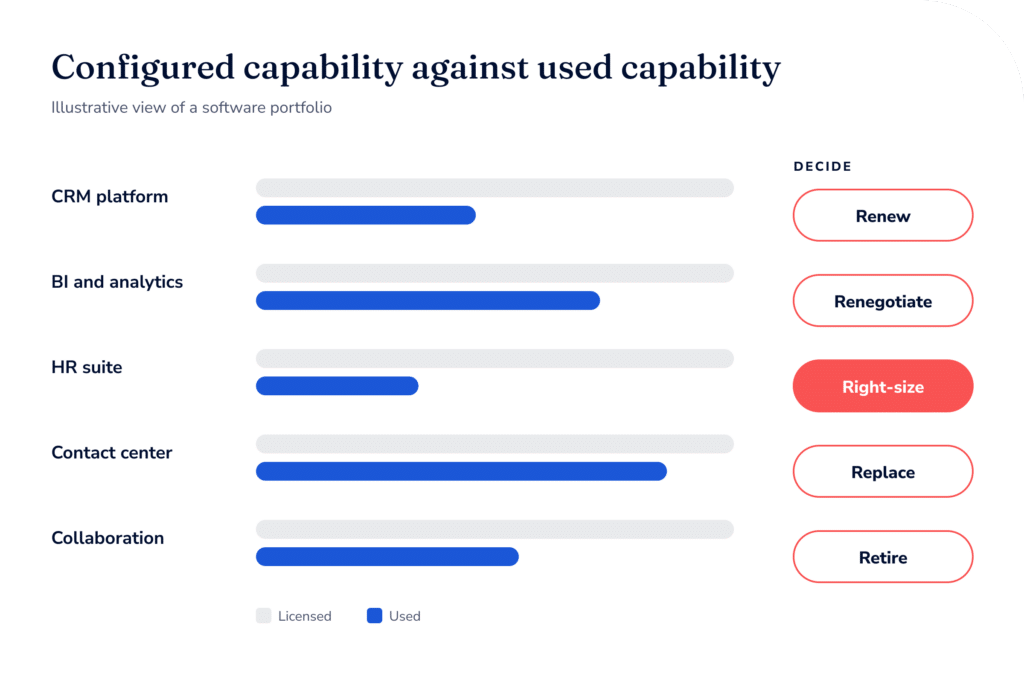
The SaaS and COTS Value Assessment reads what is actually configured and used in your own software tenants and turns it into a decision you…
Swipe To View